

Dingcheng REN
(Shanxi University, Taiyuan, China)
Adam Smith (1723-1790) is the father of economics. Two of his masterpieces, The Theory of Moral Sentiments (1759) and An Inquiry into the Nature and Causes of the Wealth of Nations (1776), came out two and a half centuries ago. In 2009, the Adam Smith Reviews and the International Adam Smith Society jointly held the Adam Smith Philosophy Symposium at Balliol College, Oxford University, to commemorate the 250th anniversary of the publication of The Theory of Moral Sentiments. The following year, a commemorative special issue was published in the fifth volume of the Adam Smith Reviews. In mid-June this year, the International Adam Smith Society, the Center for the Scottish Philosophy and the History of Economic Thought Society will hold a joint conference at the University of Glasgow to commemorate the 250th anniversary of the publication of his The Wealth of Nations.
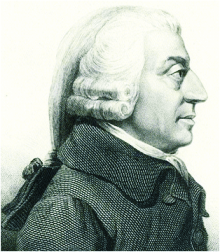
Figure 1. Adam Smith
At a time when Smith studies are heating up again, the first thing that comes to mind is the internationally acclaimed masterpiece. In fact, Smith’s ideas have had a significant impact on the Chinese academic community and society, and many related papers and books have been accumulated in the country. Among them, Hongxia HOU’s 侯红霞Adam Smith’s Theory of Virtue 《亚当·斯密的美德理论》published by Shanghai Sanlian Bookstore上海三联书店in 2013, is an impressive work. Against the backdrop of the global shift toward holistic studies of Smith and China’s domestic exploration of market economy ethics, this work successfully restores the unity of morality and economic thought in the “Adam Smith Problem.”. For the first time in the Chinese academic circle, the basic framework of Smith’s theory of virtue was systematically refined, responding to the lingering anxiety of desire in the context of China’s prosperous market economy.
Academic History Coordinates: Response, Boost and Connection
Since the nineteenth‑century German historical school posited a fundamental opposition between the “sympathy” of The Theory of Moral Sentiments and the “self‑interest” of The Wealth of Nations, the “Adam Smith problem” has remained a persistent theme in international scholarship, often leading to fragmented or oppositional readings of the two books. Hou firmly rejects this as a “pseudo‑problem.” Through careful textual analysis, she argues for the essential coherence of Smith’s system, showing that he never set sympathy against self‑interest but instead treated them as inseparable facets of human nature. This interpretation aligns with the direction taken by many Western scholars since the mid‑twentieth century—for example, in the integrative studies of Smith’s moral, legal, and economic thought by Alec Lawrence Macfie (1898-1980) at the University of Glasgow, and more recently by Charles L. Griswold (1951- ) of Boston University.
From the 1980s onward, the revival of virtue ethics in Western philosophy has prompted renewed attention to classical thinkers such as Aristotle (384-322 BC), David Hume (1711-1776), and Smith. Hou explicitly places Smith’s moral philosophy within this virtue‑ethical tradition, distinguishing it from utilitarianism and deontology. She systematically elaborates a Smith’s framework of virtue grounded in both “sympathy” and “self‑love,” and organized around four cardinal virtues: prudence, justice, benevolence, and self‑command. This reconstruction not only echoes the critique leveled by Alasdair MacIntyre (1929-2025) and others against the neglect of virtue in modern moral philosophy, but also helps disseminate virtue‑ethical thinking in the contemporary Chinese‑language world.
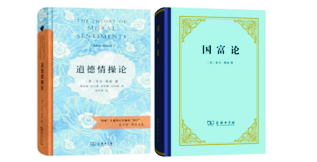
Figure 2. The Chinese Translation of Adam Smith’s Works
For a long time, the study of Smith in China was centered on The Wealth of Nations. It was not until the publication of the Chinese translation of The Theory of Moral Sentiments in 1997 that people began to pay attention to his moral philosophy. Hou’s work is one of the earliest monographs in China to systematically study Smith’s theory of virtue, promoting a shift in the Chinese academic circle from a narrowly economic interpretation toward a holistic and interdisciplinary approach, and responding to domestic concerns about the “moral foundation of the market economy”.
New Attempts in Intellectual Interpretation: Reconstruction, integration and Concern
The author breaks away from the fragmented interpretation of previous studies that focused only on the “principle of compassion” or the “invisible hand”, and proposes a four-dimensional structure of Smith’s theory of virtues (prudence, justice, kindness, self-control), and clarifies its human basis (compassion + self-love). The “two-level, three-stage” theory of self-love (material/spiritual level; progressing from desiring praise→to desiring genuine honor→to desiring virtue) that is presented enriches the hierarchy of Smith’s theory of human nature.
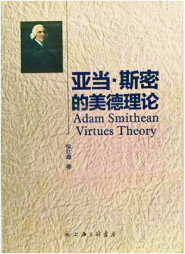
Figure 3. Adam Smith’s Theory of Virtue by Hou
In terms of textual integration understanding, Hou emphasizes the complementary relationship between The Theory of Moral Sentiments and The Wealth of Nations, noting that the former provides the moral psychological basis for the latter, and the market operation needs to be supported by appropriate moral sentiments and virtues. She also offers an ethical interpretation of the “invisible hand”: it is not only the market mechanism, but also the spontaneous order guided by moral sentiment. This through-interpretation stitches Smith’s economic thought back together with his moral philosophy, opening up new paths for subsequent studies.
What is particularly commendable is that this book does not stop at textual interpretation but closely combines Smith’s theory of virtue with specific moral issues in the contemporary Chinese market economy – such as the crisis of integrity and the conflict between wealth and virtue. The author suggests that the construction of virtue can serve as a “corrective mechanism” in the commercial society. Smith was by no means a laissez-faire; he advocated for both moral self-discipline and institutional restraint. This assertion is of practical reference value for building the ethical system of the socialist market economy and gives Smith’s classical wisdom a new life in the contemporary context.
Looking forward to new developments: Dialogue of Ideas and Reflection of The Times
Of course, Adam Smith’s Theory of Virtue also leaves room for further research by Chinese scholars.
This book has discussed the core arguments of Smith’s intellectual consistency and the four dimensions of virtue in a similar way by Griswold, Ryan Patrick Hanley (1974- ), and others. Another Smith scholar, Craig Smith (1977- ), also provided a comprehensive refutation of the “left” and “right” dichotomous interpretation of Smith’s thoughts. Therefore further attention can be paid to these works to conduct in-depth dialogues.
The book touches upon the complex dialogue relationship between Smith and classical philosophers such as the Stoics, and enlightenment thinkers such as Jean-Jacques Rousseau (1712-1778) and Immanuel Kant (1724-1804), but there is still room for further exploration. In addition, there is also room for expansion in dealing with the internal tensions of Smith’s theory. Modern social science and even natural science tools — such as moral psychology, behavioral economics, ethology, etc. — can all be introduced into the field of Smith’s study, and there is still room for deepening the handling of the internal tensions of Smith’s theory.
The author focuses on the individual cultivation of virtue, but the analysis of institutional factors (such as law, political and economic systems) in Smith’s thought can be extended by the topic of “how virtue is implemented through institutions.” In addition to principle-based advocacy, the connection with the Chinese context can also be attempted through specific historical or empirical analysis. The debate between “Smithian liberalism” and the value of the community, the study of the mechanism of “sympathy” in neuro-ethics, the biological study of the origin of virtue, and the combination of “moral self-discipline and institutional external discipline” have given rise to entirely new fields of discussion in new contexts such as the platform economy and the ethics of artificial intelligence, all of which deserve the continuous attention of future researchers.
Fund Project: Supported by the National Social Science Fund of China (General Project, Grant No. 22BKS177).
Acknowledgements: Thanks to Professor Craig Smith for reading the manuscript and pointing out one of the errors in it.
Published in the “New Horizons” cultural, ideological and academic special section of La Presse Chinoise《华侨时报》, Canada, May 8, 2026, Page 16.